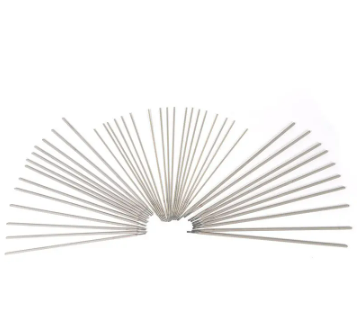
Welding electrodes are marked with numbers that indicate their tensile strength, welding position, coating type, and current compatibility, following a standardized classification system. Codes such as E6013, E7018, and E6011 provide essential information for selecting the right welding electrodes for different materials and working conditions. The letter “E” represents electrode, while the digits describe key performance characteristics, allowing more accurate selection and more consistent weld quality across applications such as structural steel, pipelines, machinery repair, and shipbuilding.
●The last digit shows coating type and current compatibility.
●E7018 welding electrodes are low-hydrogen electrodes for high-strength work.
●Correct welding electrodes improve weld quality, safety, and efficiency.
What Do Welding Electrode Numbers Mean?
Overview of the Classification System
The numbers on welding electrodesdescribe technical properties in a compact form. For example, in E7018 welding electrodes, “70” means the deposited weld metal has a tensile strength of about 70,000 psi. The third digit “1” means the welding electrodes can be used in all positions, while the final digit “8” refers to a low-hydrogen iron powder coating suitable for AC or DC current.
This classification system allows different welding electrodes to be compared quickly. Instead of relying only on product names, the code gives practical information about performance and application. For industrial welding, this reduces selection errors and makes procurement more precise.
Example: E7018 Welding Electrodes
E7018 welding electrodes are one of the most widely used low-hydrogen electrodes. The “E” means electrode, “70” indicates 70,000 psi tensile strength, “1” means all-position welding, and “8” represents low-hydrogen coating with AC or DC compatibility. These welding electrodes are commonly used for structural steel, bridges, heavy machinery, and pressure-related fabrication.
E7018 welding electrodes are valued because they provide strong mechanical properties and good crack resistance. However, they require proper storage because moisture can affect low-hydrogen performance. For critical welding work, E7018 welding electrodes should be handled according to storage and baking requirements.
Welding Electrode Code Breakdown Chart
Code Part
Example in E7018
Meaning
Practical Value
E
E
Electrode
Shows it is used as welding electrode
First two digits
70
70,000 psi tensile strength
Indicates weld metal strength
Third digit
1
All-position welding
Suitable for flat, horizontal, vertical, and overhead
Fourth digit
8
Low-hydrogen coating, AC/DC
Shows coating type and current compatibility
Detailed Explanation of Each Digit
First Two Digits: Tensile Strength
The first two digits in many welding electrodes represent the minimum tensile strength of the deposited weld metal. For example, E6013 welding electrodes provide about 60,000 psi tensile strength, while E7018 welding electrodes provide about 70,000 psi tensile strength. This strength rating is important when welding structures that must carry load or resist stress.
Higher strength does not always mean better for every job. Welding electrodes must match the base metal and design requirements. Using welding electrodes with unsuitable strength may cause weak joints, poor ductility, or unnecessary welding costs.
Third Digit: Welding Position
The third digit shows the welding positions where welding electrodes can be used. A “1” means all-position welding, including flat, horizontal, vertical, and overhead positions. A “2” usually means the welding electrodes are mainly suitable for flat and horizontal fillet welding.
Welding position affects molten metal control and slag behavior. All-position welding electrodes are often preferred in structural work because joints may appear at different angles. Choosing welding electrodes according to position helps improve bead shape, penetration, and welding efficiency.
Fourth Digit: Coating Type and Current
The fourth digit explains the flux coating type and compatible current. This digit affects arc force, penetration, slag removal, hydrogen control, and whether welding electrodes can be used with AC, DC, or both. It is one of the most important digits for practical welding performance.
For example, E6010 welding electrodes usually have a cellulose sodium coating and are commonly used with DC current. E6013 welding electrodes have rutile-based coating and are known for smooth arc performance. E7018 welding electrodes use low-hydrogen coating and are suitable for high-strength welding applications.
Flux Type Code Table
Last Digit
Coating Type
Current Type
Typical Welding Electrodes
0
High cellulose sodium
DC+
E6010
1
High cellulose potassium
AC/DC
E6011
2
High titania sodium
AC/DC
E6012
3
High titania potassium
AC/DC
E6013
4
Iron powder titania
AC/DC
E7014
5
Low-hydrogen sodium
DC+
E7015
6
Low-hydrogen potassium
AC/DC
E7016
8
Low-hydrogen iron powder
AC/DC
E7018
Common Welding Electrodes and Their Meanings
E6010 Welding Electrodes
E6010 welding electrodes are known for deep penetration and strong arc force. The “60” indicates 60,000 psi tensile strength, the “1” means all-position welding, and the “0” represents cellulose sodium coating for DC current. These welding electrodes are often used for pipeline root passes and work requiring strong penetration.
E6010 welding electrodes perform well on less-than-perfect surfaces because the arc can penetrate rust, paint, or mill scale better than many smooth-running electrodes. However, they require skilled technique because the arc is forceful and the slag is relatively thin. These welding electrodes are best suited for welders who need penetration rather than decorative bead appearance.
E6011 Welding Electrodes
E6011 welding electrodes are similar to E6010 but can work with both AC and DC current. The final digit “1” indicates a cellulose potassium coating, giving these welding electrodes more flexibility on different power sources. They are commonly used in repair, maintenance, outdoor welding, and field fabrication.
E6011 welding electrodes are useful when welding conditions are not ideal. They can handle painted or dirty surfaces better than many rutile welding electrodes. Their arc is still aggressive, so proper control is necessary to avoid excessive spatter or uneven bead shape.
E6013 Welding Electrodes
E6013 welding electrodes are general-purpose electrodes with smooth arc performance. The “60” indicates 60,000 psi tensile strength, the “1” means all-position use, and the “3” indicates a rutile potassium coating suitable for AC or DC current. These welding electrodes are widely used for light fabrication, sheet metal, frames, gates, and general repair.
E6013 welding electrodes are easy to strike and produce clean-looking weld beads. Their slag is usually easy to remove, which makes them practical for workshop production. However, these welding electrodes are not usually selected for heavy structural welding where low-hydrogen performance and high toughness are required.
E7018 Welding Electrodes
E7018 welding electrodes are low-hydrogen electrodes designed for stronger welds and better crack resistance. The “70” means 70,000 psi tensile strength, the “1” means all-position welding, and the “8” indicates low-hydrogen iron powder coating. These welding electrodes are widely used in bridges, steel structures, heavy machinery, and pressure-related fabrication.
E7018 welding electrodes produce a stable arc and smooth weld bead when stored and used correctly. Their low-hydrogen properties reduce the risk of hydrogen cracking in critical joints. Because these welding electrodes absorb moisture easily, dry storage and proper handling are essential.
How to Choose Welding Electrodes by Number
Choose by Base Metal
The base metal should be the first reference point when selecting welding electrodes. Mild steel is often welded with E6013, E6011, E6010, or E7018 welding electrodes depending on thickness, strength, and joint condition. Stainless steel requires stainless welding electrodes that match corrosion resistance and alloy composition.
For high-strength steel, low-hydrogen welding electrodes are usually preferred because cracking risk is higher. Cast iron may require nickel-based or special cast iron welding electrodes. Matching welding electrodes to the base metal improves weld integrity and reduces failure risk.
Choose by Welding Position
Welding position determines how easily molten metal can be controlled. If the job includes flat, vertical, horizontal, and overhead welds, all-position welding electrodes are usually required. E6010, E6011, E6013, and E7018 welding electrodes all include a “1” as the third digit, meaning they can be used in all positions.
Flat welding can use a wider range of welding electrodes because gravity supports the molten pool. Vertical and overhead welding require better slag control and operator skill. Selecting welding electrodes according to welding position reduces defects and improves consistency.
Choose by Strength Requirement
Strength requirements should match engineering standards and actual service conditions. E6013 welding electrodes may be suitable for lighter work, while E7018 welding electrodes are more appropriate for stronger structural welds. The first two digits provide a quick way to compare tensile strength.
However, tensile strength is only one part of selection. Toughness, ductility, hydrogen control, and base metal compatibility must also be considered. The best welding electrodes are the ones that match both the design requirement and the working environment.
Welding Electrode Selection Chart
Application
Recommended Welding Electrodes
Main Reason
Light fabrication
E6013 welding electrodes
Smooth arc and easy slag removal
Pipeline root pass
E6010 or E6011 welding electrodes
Deep penetration and strong arc
Structural steel
E7018 welding electrodes
Low hydrogen and high strength
Outdoor repair
E6011 welding electrodes
AC/DC compatibility and surface tolerance
Heavy machinery
E7018 welding electrodes
Crack resistance and stable properties
Thin mild steel
E6013 welding electrodes
Easier control and lower burn-through risk
Why Welding Electrode Numbers Matter in Industrial Work
Reducing Selection Errors
Welding electrode numbers reduce confusion during procurement and production. When the code is understood, welding electrodes can be selected according to strength, welding position, current type, and coating performance. This is especially important when multiple welding electrodes are used in one workshop or project.
Wrong welding electrodes can cause defects such as lack of fusion, cracking, porosity, or poor penetration. These problems increase rework and inspection costs. Clear understanding of welding electrode numbers supports more stable welding quality.
Improving Welding Quality
Welding electrodes influence arc stability, slag formation, penetration, and weld metal properties. Correctly selected welding electrodes produce welds that meet strength and service requirements. They also allow welders to maintain better travel speed, bead shape, and heat control.
For example, E7018 welding electrodes are chosen when low hydrogen and high strength are needed. E6013 welding electrodes are chosen when smooth operation and clean appearance are more important. The number system connects electrode performance with real welding needs.
Supporting Procurement and Quality Control
In industrial purchasing, welding electrodes are often ordered according to classification, diameter, packaging, and application. The code allows buyers to communicate product requirements clearly with suppliers. It also supports inspection, storage management, and batch traceability.
Quality control teams can verify whether welding electrodes match the welding procedure specification. This is important for steel structures, shipbuilding, pressure equipment, and machinery manufacturing. Accurate electrode identification reduces supply mistakes and improves project reliability.
Choosing a Reliable Welding Electrodes Supplier
Product Consistency
Consistent welding electrodes should provide stable arc performance, uniform coating, correct diameter, and reliable mechanical properties. In industrial production, consistency across batches is just as important as performance in a single weld test. Poor consistency can lead to unstable weld quality and increased rework.
Reliable welding electrodes must also meet relevant standards and application requirements. Coating quality, moisture resistance, packaging, and labeling all affect practical use. For buyers, product consistency is a key factor in long-term welding material supply.
Technical Application Support
Different welding electrodes require different operating conditions. Low-hydrogen welding electrodes may need drying control, while cellulosic welding electrodes require proper arc technique. Technical knowledge is important when selecting welding electrodes for structural steel, pipelines, shipbuilding, and machinery.
A professional supplier should understand electrode classification, application requirements, and common welding problems. This allows welding electrodes to be matched with real production conditions. Better technical matching reduces trial-and-error during welding operations.
Supply Capacity and Industrial Range
Large projects often require stable supply of welding electrodes in different sizes and classifications. A supplier with broad welding material capability can support welding electrodes, welding wire, flux-cored wire, stainless steel welding materials, and related products. This is useful for factories and distributors managing multiple welding applications.
Supply capacity also affects delivery stability and procurement planning. Welding electrodes used in continuous production must be available in consistent quantity and quality. For industrial buyers, reliable delivery is closely connected with production efficiency.
Conclusion
Final Explanation of Welding Electrode Numbers
The numbers on welding electrodes explain tensile strength, welding position, coating type, and current compatibility. E6010, E6011, E6013, and E7018 welding electrodes each have different meanings and applications. Understanding these numbers makes it easier to select welding electrodes that match base metal, position, strength, and working conditions.
Industrial Selection and Supplier Choice
For industrial welding, electrode selection should consider both technical classification and product reliability. SHANDONG JULI WELDING CO., LTD provides welding materials including welding electrodes, welding wire, flux-cored wire, stainless steel welding materials, and related welding solutions. When projects require stable welding electrodes and consistent welding material supply, choosing an experienced manufacturer can support better welding quality and production performance.
FAQ
What do the numbers on welding electrodes mean?
The numbers on welding electrodes indicate tensile strength, welding position, flux coating type, and current compatibility. For example, E7018 welding electrodes provide about 70,000 psi tensile strength, can be used in all positions, and have low-hydrogen iron powder coating. These numbers make welding electrodes easier to identify and select.
What does E7018 mean?
E7018 means the electrode has 70,000 psi tensile strength, can be used in all welding positions, and has a low-hydrogen iron powder coating. E7018 welding electrodes are commonly used for structural steel, heavy fabrication, bridges, and machinery. These welding electrodes require dry storage to maintain low-hydrogen performance.
What is the difference between E6013 and E7018 welding electrodes?
E6013 welding electrodes are general-purpose electrodes with smooth arc performance and easy slag removal. E7018 welding electrodes are low-hydrogen electrodes designed for stronger welds and better crack resistance. E6013 is often used for light fabrication, while E7018 is better for structural and heavy-duty welding.
Are welding rods and welding electrodes the same?
In many common welding discussions, welding rods and welding electrodes are used to describe similar stick welding consumables. However, welding electrodes is a broader term because it can also include non-consumable tungsten electrodes used in TIG welding. The exact meaning depends on the welding process.
How do I choose the right welding electrodes?
The right welding electrodes should be selected according to base metal, welding position, tensile strength, current type, and service condition. E6013 welding electrodes are often suitable for light fabrication, while E7018 welding electrodes are preferred for structural and high-strength applications. Critical projects should follow welding procedure specifications and proper storage requirements.