In the sophisticated field of industrial fabrication, the arc welding electrode is often viewed simply as a consumable rod. However, to the metallurgical engineer and the professional welder, it represents the most critical junction in the entire welding circuit. An arc welding electrode is a precision-engineered conductor that facilitates the conversion of electrical energy into a localized plasma state, reaching temperatures that can exceed the surface temperature of the sun. It is the "pulse" of metal fusion, acting as the bridge between raw power and structural integrity.
This article explores the deep physics, chemical dynamics, and engineering evolution of welding electrodes specifically within the context of the electric arc.
The Physics of the Arc: The Electrode’s Workspace
To understand arc welding electrodes, one must first appreciate the violent and high-energy environment they inhabit. The electric arc is not merely a spark; it is a continuous discharge of electricity through a column of ionized gas known as plasma.
Ionization and Electron Flow
The process begins with thermionic emission. As the electrode tip approaches the workpiece, the intense electrical potential causes electrons to leap across the gap. This flow of electrons hits the air molecules, stripping them of their own electrons and creating ions. These ions form a conductive path that sustains the arc. The electrode is designed to facilitate this emission smoothly; any inconsistency in the material of the electrode would cause the arc to sputter, extinguish, or "wander," resulting in a failed weld.
Heat Distribution and Polarity
The electrode is responsible for managing heat distribution. Depending on the polarity—Direct Current Electrode Positive (DCEP) or Direct Current Electrode Negative (DCEN)—the concentration of heat changes. In DCEP, approximately two-thirds of the heat is concentrated at the electrode tip, which is ideal for deep penetration. In DCEN, more heat is directed at the workpiece. High-quality welding electrodes are designed to remain stable regardless of these extreme thermal shifts, maintaining their structural shape even as they melt at several thousand degrees.
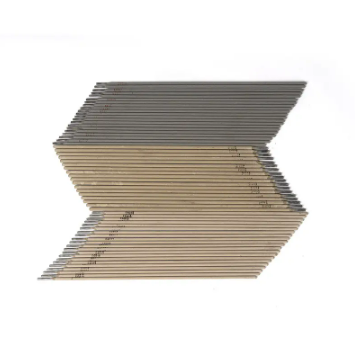
Anatomy of an Arc Welding Electrode: A Multi-Functional Tool
An arc welding electrode is a masterclass in multi-functional design. It is rarely a single material; rather, it is a composite tool designed to perform three distinct roles simultaneously.
The Conductive Core
The inner wire of the electrode is the primary path for the welding current. Beyond conductivity, its chemistry is vital. In arc welding, the core wire usually matches the base metal, but it also contains specific alloying elements that compensate for the "burn-off" of minerals during the intense heat of the arc. A core wire with impurities or inconsistent diameter will lead to resistance fluctuations, ruining the stability of the plasma column.
The Gaseous Shield: In-Situ Chemistry
Atmospheric gases like oxygen and nitrogen are the enemies of a strong weld; they cause porosity and brittleness. As the electrode burns, the chemicals in its coating undergo a rapid combustion process, releasing a cloud of shielding gas. This creates a localized vacuum-like environment, protecting the molten metal from the outside world. This "in-situ" chemistry is what allows arc welding to be performed in open-air environments, such as on bridges or skyscrapers.
The Slag System: Thermal Insulation
As the metal fuses, the electrode also produces a liquid slag. This slag floats to the top of the weld pool. Its role is twofold: it protects the cooling metal from oxidation and, perhaps more importantly, acts as a thermal blanket. By slowing down the cooling rate, the slag ensures that the crystalline structure of the metal forms correctly, preventing the internal stresses that lead to cracking.
Evolution of the Electrode Across Different Arc Processes
As welding technology has advanced, the role of the electrode has evolved to suit different industrial needs.
Shielded Metal Arc Welding (SMAW): The All-in-One Electrode
Commonly known as stick welding, SMAW utilizes a consumable electrode that provides its own shielding. It is the most versatile form of arc welding because the electrode contains everything needed for the weld within its coating. It remains the industry standard for outdoor construction and heavy repair because it does not require external gas tanks or complex wire-feeding machinery.
Gas Tungsten Arc Welding (GTAW): The Precision Transmitter
In TIG welding, the welding electrodes are non-consumable, typically made of tungsten. Here, the electrode’s only job is to carry the arc. It does not melt into the joint. This allows for extreme precision, as the welder can control the heat of the arc independently of the amount of filler metal being added. The "work function" of the tungsten—its ability to release electrons—is often enhanced by adding small amounts of rare earth oxides like thorium or lanthanum.
Gas Metal Arc Welding (MIG/GMAW): The Continuous Feed
In MIG welding, the electrode is a continuous wire fed from a spool. This represents the industrialization of the arc. By automating the electrode delivery, manufacturers can achieve significantly higher deposition rates and longer continuous welds. This process shifts the focus of the electrode from a manual tool to a high-speed industrial consumable, essential for automotive and heavy equipment manufacturing.
Electrode Polarity: How the Current Direction Defines the Weld
The direction in which electricity flows through the electrode completely changes the characteristics of the arc.
DCEP (Reverse Polarity): Here, the electrons flow from the workpiece to the electrode. This creates a powerful digging action in the weld pool, making it the preferred choice for thick structural steel where deep penetration is required.
DCEN (Straight Polarity): The electrons flow from the electrode to the workpiece. This results in a faster melt rate of the electrode itself, which is beneficial for thin sheet metal where you want to avoid burning through the base material.
Alternating Current (AC): The flow of electricity switches back and forth. This is particularly important for electrodes used on aluminum. The "positive" half of the cycle helps strip away the tough oxide layer on the aluminum surface, while the "negative" half provides the heat for the weld.
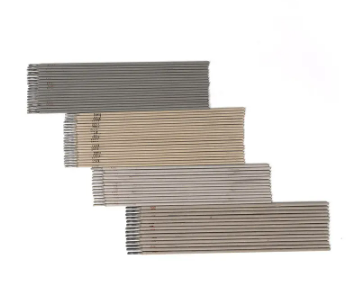
The Metallurgy of the Arc: How Electrodes Modify the Joint
Every time an arc is struck, a miniature metallurgical experiment takes place. The electrode is the primary agent of change in this experiment.
Specialized welding electrodes do more than just join metal; they improve it. Through the arc, electrodes can transfer alloying elements like chromium for corrosion resistance, nickel for low-temperature toughness, or molybdenum for high-heat strength. Furthermore, deoxidizing agents within the electrode react with any surface rust or scale, "cleaning" the metal during the split-second duration of the arc. Without these carefully balanced chemical additions, modern high-strength alloys would be impossible to join.
Conclusion: The Arc Electrode as an Engineering Marvel
The arc welding electrode is a testament to human ingenuity in the face of extreme conditions. It is a tool that must withstand 6,000°C temperatures, conduct hundreds of amps of current, and perform complex chemical reactions all within a fraction of a second. From the manual stick welder in a shipyard to the robotic MIG arm in a factory, the electrode remains the indispensable heart of the fusion process.
Powering the Arc with Shandong Juli Welding Co., Ltd.
A stable arc requires an electrode manufactured with absolute precision. At Shandong Juli Welding Co., Ltd., we have spent over 20 years perfecting the physics of the arc. Our 150,000-square-meter facility in Dezhou is dedicated to producing welding electrodes that offer superior arc stability, minimal spatter, and consistent metallurgical transfer.
As the largest manufacturer in Shandong province, we understand that our 450,000-metric-ton annual capacity represents the literal backbone of infrastructure worldwide. By maintaining strict control over core wire concentricity and flux chemical balance, we ensure that our products meet the highest international standards. Whether you are working on a small-scale repair or a massive global project, Shandong Juli Welding provides the reliable energy and material excellence needed to keep your industry moving forward.


