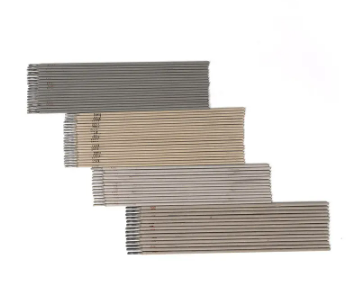
Welding electrodes are essential consumables or conductors used to create an electric arc and join metals together. In many welding processes, welding electrodes not only transfer current but also influence weld strength, arc stability, slag formation, and final bead appearance, making them a critical factor in determining welding quality, production efficiency, and long-term structural reliability. Different welding electrodes are designed for specific base metals, welding positions, current types, and working environments, meaning that a welding electrodesuitable for light fabrication may not perform effectively in demanding applications such as bridge construction, shipbuilding, pressure vessels, or heavy machinery. A clear understanding of the different types of welding electrodes makes it possible to select the appropriate option based on mechanical properties and operating conditions, ensuring consistent and reliable welding performance across various industrial scenarios.
Key Takeaways
●Welding electrodescan be divided into consumable and non-consumable types.
●Common welding electrodes include E6010, E6011, E6013, E7018, stainless steel electrodes, cast iron electrodes, and tungsten electrodes.
●Coating type strongly affects arc performance, penetration, slag removal, and hydrogen control.
●E7018 welding electrodes are widely used for high-strength and low-hydrogen welding applications.
●The right welding electrodes should be selected according to material, welding position, strength requirement, and working environment.
Main Types of Welding Electrodes
Consumable Welding Electrodes
Consumable welding electrodes melt during welding and become part of the weld metal. These welding electrodes are widely used in shielded metal arc welding, flux-cored arc welding, and other common industrial welding processes. Their composition, coating, and diameter directly affect weld penetration, deposition rate, and mechanical performance.
Consumable welding electrodes are often preferred in construction, steel fabrication, machinery repair, and pipeline welding because they are flexible and practical. They can be used in field work where mobility and adaptability are important. Many mild steel welding electrodes are also suitable for multiple welding positions, making them useful for complex structures.
Non-Consumable Welding Electrodes
Non-consumable welding electrodes do not melt into the weld pool under normal welding conditions. Tungsten welding electrodes used in TIG welding are the most common example. These welding electrodes create a stable arc while filler metal, if required, is added separately.
Non-consumable welding electrodes are often used when precision, clean weld appearance, and strong control of heat input are required. Stainless steel, aluminum, nickel alloys, and thin metal sheets often benefit from this welding method. Although tungsten welding electrodes are not consumed like stick electrodes, they still require correct grinding, current selection, and contamination control.
Welding Electrode Classification Chart
Electrode Type
Common Process
Main Feature
Typical Application
E6010
SMAW
Deep penetration
Pipeline and root pass welding
E6011
SMAW
Works with AC/DC
Repair and outdoor welding
E6013
SMAW
Smooth arc and easy slag removal
Light fabrication and general welding
E7018
SMAW
Low hydrogen and high strength
Structural steel and heavy fabrication
Stainless Steel Electrode
SMAW
Corrosion resistance
Chemical, food, and stainless structures
Tungsten Electrode
TIG
Non-consumable and precise arc
Thin metal, stainless steel, and alloy welding
Types of Welding Electrodes by Coating
Cellulosic Welding Electrodes
Cellulosic welding electrodes contain a high percentage of cellulose in the coating. During welding, the coating produces a strong shielding gas and creates deep penetration. These welding electrodes are widely used for pipeline welding and root pass welding because they can form strong welds in demanding positions.
Cellulosic welding electrodes are suitable for vertical-down welding and field conditions where high arc force is needed. However, they require skilled operation because the arc can be aggressive and slag coverage is usually thin. Proper handling and storage are also necessary to maintain stable welding performance.
Rutile Welding Electrodes
Rutile welding electrodes contain titanium dioxide in the coating and are known for smooth arc characteristics. These welding electrodes are easy to strike, produce attractive weld beads, and allow simple slag removal. E6013 welding electrodes are a common rutile type used in general fabrication and maintenance welding.
Rutile welding electrodes are often selected for light steel structures, sheet metal, and workshop welding. They are suitable for welders who need stable operation and clean appearance rather than extremely deep penetration. Their versatility makes them one of the most common categories of welding electrodes in general industrial use.
Basic Low-Hydrogen Welding Electrodes
Basic welding electrodes are designed to reduce hydrogen in the weld metal. E7018 welding electrodes are the best-known low-hydrogen type and are widely used where weld toughness and crack resistance are required. These welding electrodes are common in bridges, pressure vessels, heavy equipment, and structural steel projects.
Low-hydrogen welding electrodes usually require careful storage in dry conditions. Moisture absorption can increase the risk of hydrogen cracking, especially in thick steel or high-strength steel welding. For critical applications, basic welding electrodes should be baked or stored according to welding procedure requirements.
Common Welding Electrodes and Their Applications
E6010 and E6011 Welding Electrodes
E6010 welding electrodes are known for deep penetration and strong arc force. They are commonly used with DC current and are especially suitable for root passes in pipeline welding. These welding electrodes can cut through rust, paint, and surface contamination better than many mild steel electrodes.
E6011 welding electrodes have similar deep-penetration characteristics but can be used with both AC and DC power sources. This makes them practical for maintenance, repair, and outdoor welding where power supply conditions may vary. Both E6010 and E6011 welding electrodes require good technique because arc control is more demanding than with rutile electrodes.
E6013 Welding Electrodes
E6013 welding electrodes are popular for general-purpose welding because they provide a soft arc and smooth bead appearance. These welding electrodes are easy to use on thin to medium-thickness mild steel. They are commonly applied in light fabrication, small machinery, gates, frames, and sheet metal structures.
The slag from E6013 welding electrodes is usually easy to remove, which improves workshop efficiency. Their moderate penetration reduces the risk of burn-through on thinner plates. However, E6013 welding electrodes may not be the best choice for highly stressed structures that require superior toughness or low-hydrogen performance.
E7018 Welding Electrodes
E7018 welding electrodes are low-hydrogen electrodes designed for high-strength welds. These welding electrodes typically provide a tensile strength of 70,000 psi and are widely used in structural steel fabrication. Their stable arc, strong mechanical properties, and good crack resistance make them suitable for demanding industrial work.
E7018 welding electrodes are often chosen for bridges, buildings, pressure equipment, machinery, and shipbuilding. They are especially useful when weld integrity and impact toughness are important. Because these welding electrodes are sensitive to moisture, correct packaging, baking, and storage are important for consistent results.
Welding Electrodes Selection Guide
Selection by Base Metal
The base metal is one of the first factors when selecting welding electrodes. Mild steel usually uses E6013, E7018, E6010, or E6011 welding electrodes depending on the strength and penetration requirements. Stainless steel requires stainless welding electrodes that match the alloy grade and corrosion resistance requirements.
Cast iron needs special welding electrodes, often nickel-based or cast-iron-specific types. High-strength steel may require low-hydrogen welding electrodes with controlled mechanical properties. Matching welding electrodes with base metal composition reduces cracking, porosity, weak welds, and premature failure.
Selection by Welding Position
Welding position affects how molten metal flows and solidifies. Some welding electrodes perform well in flat and horizontal positions but are difficult to control in vertical or overhead welding. All-position welding electrodes such as E7018 and E6013 are often selected for structural work with complex joint positions.
For vertical-down welding, cellulosic welding electrodes may provide better penetration and travel speed. For overhead welding, stable slag control and arc behavior are very important. Choosing welding electrodes according to position improves bead shape, penetration consistency, and welder productivity.
Selection by Strength and Service Condition
Strength requirements should always be compared with the design standard and service environment. E7018 welding electrodes are commonly selected when high tensile strength and low-hydrogen performance are required. For light-duty work, E6013 welding electrodes may be enough if the joint is not exposed to heavy stress.
Service conditions such as temperature, vibration, corrosion, and impact loading also influence electrode selection. Structures used outdoors, offshore, underground, or in chemical environments may require welding electrodes with specific toughness or corrosion resistance. The final choice should match both welding procedure requirements and actual working conditions.
Welding Electrode Selection Chart
Selection Factor
Recommended Electrode Direction
Reason
Thin mild steel
E6013 welding electrodes
Smooth arc and lower burn-through risk
Structural steel
E7018 welding electrodes
Low hydrogen and high strength
Pipeline root pass
E6010 or E6011 welding electrodes
Deep penetration and strong arc force
Stainless steel
Stainless steel welding electrodes
Corrosion resistance and alloy compatibility
Outdoor repair
E6011 welding electrodes
AC/DC usability and surface tolerance
Critical heavy fabrication
Low-hydrogen welding electrodes
Better crack resistance and weld toughness
Storage and Handling of Welding Electrodes
Moisture Control
Moisture control is especially important for low-hydrogen welding electrodes. If welding electrodes absorb moisture, hydrogen can enter the weld metal and increase cracking risk. This problem is serious in thick plate welding, restrained joints, and high-strength steel applications.
E7018 welding electrodes should be stored in dry conditions and may require baking before use. Opened packages should not be left exposed in humid workshops for long periods. Proper moisture control protects weld quality and maintains stable arc performance.
Packaging and Transportation
Good packaging protects welding electrodes from mechanical damage, moisture, and contamination. Damaged coating can cause unstable arc, excessive spatter, porosity, or uneven slag coverage. For export and industrial supply, packaging consistency is also important for storage, transport, and inventory control.
Carton packaging, sealed inner packs, and clear labeling make welding electrodes easier to manage in warehouses and job sites. Labels should show electrode type, size, specification, batch number, and storage requirements. Proper packaging supports traceability and quality control throughout the supply chain.
On-Site Handling Practices
On-site handling affects the final performance of welding electrodes even when the product quality is reliable. Welding electrodes should be kept away from oil, water, dust, and direct ground contact. Welders should avoid using electrodes with cracked coating, rusted core wire, or visible contamination.
Electrode ovens may be used when low-hydrogen welding electrodes are required for critical jobs. Unused welding electrodes should be returned to controlled storage instead of being left in open air. These simple practices reduce welding defects and improve consistency across production batches.
Why Welding Electrode Quality Matters
Weld Strength and Structural Safety
The quality of welding electrodes directly affects weld strength and structural safety. Poor-quality welding electrodes may create defects such as porosity, undercut, slag inclusion, weak fusion, or unstable bead shape. These defects can reduce load-bearing capacity and shorten service life.
In structural steel, shipbuilding, bridges, and machinery, welding electrodes must deliver predictable mechanical properties. Consistent chemical composition and coating quality are necessary for stable performance. Reliable welding electrodes reduce rework, inspection failure, and long-term maintenance risk.
Arc Stability and Welding Efficiency
Stable arc performance improves welding efficiency and operator control. High-quality welding electrodes strike easily, maintain a steady arc, and produce uniform slag coverage. This allows welders to maintain proper travel speed and bead consistency.
Unstable welding electrodes can increase spatter, arc interruption, and slag removal time. These issues slow production and increase labor cost. For industrial fabrication, electrode consistency across batches is as important as performance in a single test weld.
Compatibility with Industrial Applications
Different industries require different welding electrodes because working conditions vary widely. Shipbuilding requires welds that withstand vibration, impact, and marine environments. Construction and bridge welding require strength, toughness, and reliable performance under load.
Machinery manufacturing may require welding electrodes that match high-strength steels or wear-resistant components. Petrochemical and pressure equipment applications may require strict control of hydrogen and mechanical properties. Selecting suitable welding electrodes ensures that the weld meets both production and service requirements.
Conclusion
Final Thoughts on Welding Electrode Types
Different types of welding electrodes are designed for different welding processes, materials, positions, and performance requirements. E6010, E6011, E6013, E7018, stainless steel electrodes, cast iron electrodes, and tungsten electrodes all have distinct advantages. Understanding these differences allows better control of weld strength, appearance, penetration, and long-term durability.
Choosing the Right Supplier
When purchasing welding electrodes for industrial production, product consistency, technical experience, certification, and supply capacity should be considered together. SHANDONG JULI WELDING CO., LTD provides welding materials for a wide range of industrial applications, including welding electrodes, welding wire, flux-cored wire, stainless steel welding materials, and related welding solutions. For projects that require stable welding electrodes and reliable welding material supply, working with an experienced manufacturer can improve procurement confidence and production quality.
FAQ
What are welding electrodes?
Welding electrodes are conductors or consumables used to create an electric arc during welding. In many processes, welding electrodes melt and become part of the weld metal. In TIG welding, tungsten welding electrodes create the arc but normally do not melt into the weld pool.
What are the most common types of welding electrodes?
The most common welding electrodes include E6010, E6011, E6013, E7018, stainless steel electrodes, cast iron electrodes, and tungsten electrodes. Each type has different arc behavior, penetration, coating composition, and application range. E7018 welding electrodes are widely used for structural and low-hydrogen welding applications.
What is the difference between E6013 and E7018 welding electrodes?
E6013 welding electrodes are commonly used for general-purpose welding and provide smooth arc performance with easy slag removal. E7018 welding electrodes are low-hydrogen electrodes designed for stronger welds and better crack resistance. E6013 is often used for light fabrication, while E7018 is more suitable for structural steel and heavy-duty welding.
Are all welding electrodes consumable?
Not all welding electrodes are consumable. Stick welding electrodes and many flux-cored electrodes melt into the weld and are considered consumable welding electrodes. Tungsten electrodes used in TIG welding are non-consumable because they mainly create the arc while filler metal is added separately when needed.
How should welding electrodes be stored?
Welding electrodes should be stored in a dry, clean, and protected environment. Low-hydrogen welding electrodes such as E7018 require stricter moisture control because absorbed moisture can increase hydrogen cracking risk. Opened packages should be handled carefully, and critical applications may require electrode ovens or baking procedures.