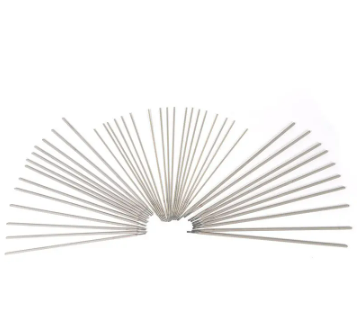
Choosing welding electrodesis an important step in achieving stable arc performance, proper penetration, strong weld strength, and reliable joint quality. Different welding electrodes are designed for different base metals, welding positions, current types, coating systems, and service conditions. A suitable electrode can reduce defects, improve welding efficiency, and support consistent results in structural steel, machinery manufacturing, shipbuilding, repair work, and general fabrication.
Key Takeaways
●Welding electrodes should be selected according to base metal and application.
●Coating type affects arc stability, penetration, slag, and hydrogen control.
●E7018 welding electrodes are commonly used for structural steel.
●Electrode diameter and welding current must match the workpiece thickness.
●Welding position influences electrode choice and operating technique.
●Proper welding electrodes selection improves weld quality and production efficiency.
Understanding Welding Electrodes
What Are Welding Electrodes?
Welding electrodes are materials used to conduct current and create an electric arc between the electrode and the base metal. In many welding processes, welding electrodes also melt and become part of the weld metal. Their chemical composition, coating type, and diameter directly influence weld strength, arc behavior, penetration, and bead appearance.
In shielded metal arc welding, welding electrodes are usually covered with flux coating. This coating produces shielding gas and slag to protect the molten weld pool from atmospheric contamination. Because of this function, welding electrodes are not only electrical conductors but also important metallurgical materials.
Main Types of Welding Electrodes
Welding electrodes can be divided into consumable and non-consumable types. Consumable welding electrodes melt into the weld pool and provide filler metal, while non-consumable electrodes such as tungsten electrodes mainly create the arc. Stick electrodes, flux-cored wires, and many arc welding consumables belong to the consumable category.
For common industrial applications, stick welding electrodes such as E6013, E6011, E6010, and E7018 are widely used. Each type has different strength, coating, current compatibility, and welding position performance. Selecting welding electrodes requires understanding both the classification code and the actual working condition.
Welding Electrodes vs Welding Rods
The terms welding electrodes and welding rods are often used together, especially in stick welding. In this case, welding rods are also welding electrodes because they conduct current and provide filler metal. However, welding electrodes is a broader term because it also includes tungsten electrodes used in TIG welding.
Filler rods used in TIG welding may not conduct welding current, while welding electrodes always participate in arc generation or current transfer. This difference is important when selecting materials for different welding processes. For stick welding, the electrode classification is usually the main selection reference.
Key Factors for Choosing Welding Electrodes
Base Metal Type
The base metal should be the first factor when selecting welding electrodes. Mild steel can often be welded with E6013, E6011, E6010, or E7018 welding electrodes depending on strength, thickness, and application. Stainless steel requires stainless welding electrodes that match alloy composition and corrosion resistance requirements.
High-strength steel often requires low-hydrogen welding electrodes to reduce cracking risk. Cast iron may require nickel-based or special cast iron welding electrodes because of its brittle structure. Matching welding electrodes with the base metal improves weld compatibility and reduces the chance of cracking, porosity, or weak joints.
Welding Position
Welding position affects how molten metal flows and solidifies during welding. Some welding electrodes work well in flat and horizontal positions but are difficult to control in vertical or overhead welding. All-position welding electrodes are usually preferred for structural work with different joint orientations.
E6010, E6011, E6013, and E7018 welding electrodes can be used in all positions when operated correctly. However, each type has different slag behavior and arc control requirements. Choosing welding electrodes based on position improves bead shape, penetration consistency, and operator control.
Strength Requirement
Strength requirement should match the base metal and service condition. E6013 welding electrodes generally provide about 60,000 psi tensile strength, while E7018 welding electrodes provide about 70,000 psi tensile strength. For structural steel and heavy-duty welding, E7018 welding electrodes are often preferred because of their low-hydrogen performance and stronger mechanical properties.
Higher strength is not always the best choice for every job. Welding electrodes must match the design requirement, ductility, toughness, and joint condition. Using welding electrodes with unsuitable strength may cause poor performance, unnecessary cost, or reduced weld reliability.
Welding Electrode Selection Chart
Welding Condition
Recommended Welding Electrodes
Main Reason
Light mild steel fabrication
E6013 welding electrodes
Smooth arc and easy slag removal
Structural steel
E7018 welding electrodes
Low hydrogen and high strength
Pipeline root pass
E6010 or E6011 welding electrodes
Deep penetration and strong arc force
Outdoor repair
E6011 welding electrodes
AC/DC compatibility and surface tolerance
Thin mild steel
E6013 welding electrodes
Easier control and lower burn-through risk
Heavy machinery
E7018 welding electrodes
Crack resistance and stable weld properties
Electrode Coating and Its Impact
Cellulosic Welding Electrodes
Cellulosic welding electrodes contain cellulose-based coating that creates strong shielding gas and deep penetration. These welding electrodes are often used for pipeline root passes and field welding where arc force is important. E6010 and E6011 welding electrodes are common examples of cellulosic electrodes.
Cellulosic welding electrodes can perform well on less-than-perfect surfaces, including steel with light rust or mill scale. However, they require skilled operation because the arc is more aggressive and slag coverage is thinner. These welding electrodes are suitable when penetration is more important than smooth bead appearance.
Rutile Welding Electrodes
Rutile welding electrodes contain titanium dioxide in the coating and are known for smooth arc performance. E6013 welding electrodes are a typical rutile type used for general fabrication, light structures, sheet metal, and repair work. These welding electrodes are easy to strike and usually produce clean-looking weld beads.
Rutile welding electrodes are often selected when ease of use and bead appearance are important. Their slag is generally easy to remove, which improves workshop efficiency. However, they may not be ideal for critical structures that require low-hydrogen performance or high toughness.
Low-Hydrogen Welding Electrodes
Low-hydrogen welding electrodes are designed to reduce hydrogen in the weld metal and lower cracking risk. E7018 welding electrodes are the most common low-hydrogen type used for structural steel, bridges, machinery, and heavy fabrication. These welding electrodes provide strong mechanical properties and good weld reliability when stored properly.
Moisture control is essential for low-hydrogen welding electrodes. If the coating absorbs moisture, hydrogen can enter the weld and increase cracking risk. For critical applications, these welding electrodes should be stored in dry conditions and handled according to welding procedure requirements.
Electrode Size and Current Selection
Electrode Diameter
Electrode diameter should be selected according to base metal thickness, joint design, and welding position. Small-diameter welding electrodes are easier to control on thin materials and vertical welding positions. Larger welding electrodes provide higher deposition rates but require more current and better heat control.
Using welding electrodes that are too large for thin metal may cause burn-through or excessive heat input. Using welding electrodes that are too small for thick sections may reduce productivity and penetration. Proper diameter selection improves weld quality and production efficiency.
Welding Current Matching
Welding current must match the electrode type and diameter. If current is too low, welding electrodes may stick, produce unstable arc, or cause lack of fusion. If current is too high, welding electrodes may create excessive spatter, undercut, or poor bead control.
Current selection also depends on AC or DC compatibility. Some welding electrodes are designed for DC only, while others can operate with AC or DC. Matching welding electrodes with the correct current type and amperage range ensures stable arc behavior and predictable weld results.
Electrode Diameter and Current Chart
Electrode Diameter
Common Current Range
Typical Application
2.0 mm
40–70 A
Thin sheet and light repair
2.5 mm
60–100 A
Light fabrication and small joints
3.2 mm
90–140 A
General fabrication and structural work
4.0 mm
130–180 A
Medium to thick steel sections
5.0 mm
180–250 A
Heavy fabrication and high deposition
Common Welding Electrodes for Selection
E6013 Welding Electrodes
E6013 welding electrodes are widely used for general-purpose welding. They provide smooth arc performance, easy slag removal, and good bead appearance. These welding electrodes are suitable for light fabrication, sheet metal, frames, gates, and maintenance work.
E6013 welding electrodes are often chosen when the workpiece is thin to medium thickness. Their moderate penetration reduces the risk of burn-through, especially on thinner steel. However, these welding electrodes may not be the best option for heavy structural welding that requires superior crack resistance.
E7018 Welding Electrodes
E7018 welding electrodes are low-hydrogen electrodes designed for strong and reliable welds. They are widely used in structural steel, bridges, machinery, pressure-related fabrication, and shipbuilding. These welding electrodes provide good tensile strength, stable arc characteristics, and improved crack resistance.
E7018 welding electrodes require dry storage and proper handling. Moisture in the coating can reduce low-hydrogen performance and increase cracking risk. For critical welding applications, E7018 welding electrodes should be selected and managed according to welding procedure specifications.
E6010 and E6011 Welding Electrodes
E6010 welding electrodes are known for deep penetration and strong arc force. They are commonly used in pipeline root passes and applications where surface conditions are not perfect. These welding electrodes usually require DC current and skilled handling.
E6011 welding electrodes have similar penetration characteristics but can work with both AC and DC. This makes them practical for outdoor repair, field fabrication, and maintenance welding. Both welding electrodes are useful when strong penetration and surface tolerance are required.
Common Mistakes When Choosing Welding Electrodes
Ignoring Base Metal Compatibility
One common mistake is choosing welding electrodes without considering the base metal. Mild steel, stainless steel, cast iron, and high-strength steel require different welding electrodes. Incorrect matching may cause cracking, weak fusion, corrosion problems, or poor mechanical performance.
Base metal thickness also affects selection. Thin metal may require smaller welding electrodes with controlled heat input, while thick sections may need stronger penetration and higher strength. Proper compatibility reduces weld defects and improves service life.
Using the Wrong Current or Polarity
Another common mistake is using welding electrodes with the wrong current type or polarity. Some welding electrodes operate best with DC positive, while others can use AC or DC. Incorrect current selection may cause unstable arc, excessive spatter, poor penetration, or frequent sticking.
Current must also match electrode diameter. Larger welding electrodes require higher amperage, while smaller welding electrodes need lower current. Following recommended current ranges improves arc stability and bead consistency.
Poor Storage and Handling
Poor storage can damage welding electrodes and reduce weld quality. Low-hydrogen welding electrodes such as E7018 are especially sensitive to moisture. If these welding electrodes absorb moisture, they may increase the risk of hydrogen cracking.
Welding electrodes should be kept dry, clean, and protected from oil, dust, and mechanical damage. Electrodes with cracked coating, rusted core wire, or visible contamination should not be used for critical applications. Proper handling protects performance from warehouse to welding site.
Choosing a Reliable Welding Electrodes Manufacturer
Product Quality and Consistency
A reliable manufacturer should provide welding electrodes with stable coating quality, accurate diameter, and consistent mechanical properties. In industrial welding, welding electrodes must perform consistently across batches. Poor consistency can cause unstable arc behavior, rework, and inspection problems.
Product quality also includes packaging, labeling, and moisture protection. Clear classification and batch information allow better traceability. For buyers who use welding electrodes in continuous production, consistency is a major factor in maintaining welding quality.
Technical Capability and Product Range
Different projects require different welding electrodes, including general-purpose electrodes, low-hydrogen electrodes, stainless steel electrodes, hardfacing electrodes, and special alloy electrodes. A capable manufacturer should understand material matching, current selection, coating behavior, and application requirements. This technical capability supports more accurate welding electrodes selection.
A wider product range is also useful for factories and distributors. Welding electrodes, welding wire, flux-cored wire, and stainless steel welding materials are often used together in industrial production. A complete welding material supply system can simplify procurement and improve production planning.
Supply Stability for Industrial Projects
Industrial projects often require stable supply of welding electrodes in different specifications and packaging forms. Delivery reliability affects project schedules, inventory control, and production continuity. For large-scale fabrication, welding electrodes must be available in consistent quality and quantity.
Supply stability is especially important for construction, shipbuilding, machinery manufacturing, and steel structure projects. Frequent changes in welding electrodes may affect welding parameters and inspection results. A dependable manufacturer reduces procurement risk and supports stable welding performance.
Conclusion
Selecting welding electrodes requires careful consideration of base metal, welding position, strength requirement, coating type, current compatibility, electrode diameter, and service environment. E6013 welding electrodes are suitable for general fabrication, E7018 welding electrodes are widely used for structural and low-hydrogen welding, and E6010 or E6011 welding electrodes are selected when deep penetration is required. For industrial applications, product consistency and supplier capability are also important. SHANDONG JULI WELDING CO., LTD supplies welding materials including welding electrodes, welding wire, flux-cored wire, stainless steel welding materials, and related welding solutions, supporting different welding needs with stable product quality and reliable supply capability.
FAQ
How to choose welding electrodes?
Welding electrodes should be chosen according to base metal, welding position, strength requirement, coating type, current compatibility, and service condition. Mild steel may use E6013, E6011, E6010, or E7018 welding electrodes depending on the application. Critical structures often require low-hydrogen welding electrodes such as E7018.
What welding electrodes should be used for structural steel?
E7018 welding electrodes are commonly used for structural steel because they provide low-hydrogen performance and strong mechanical properties. They are suitable for bridges, buildings, machinery, and heavy fabrication. Proper storage is important to maintain low-hydrogen performance.
How do I select electrode size?
Electrode size should be selected according to base metal thickness, joint design, welding position, and current capacity. Smaller welding electrodes are better for thin materials and positional welding. Larger welding electrodes are used for thicker sections and higher deposition rates.